

001-LOK-24
23/02/2024
001-LOK-24
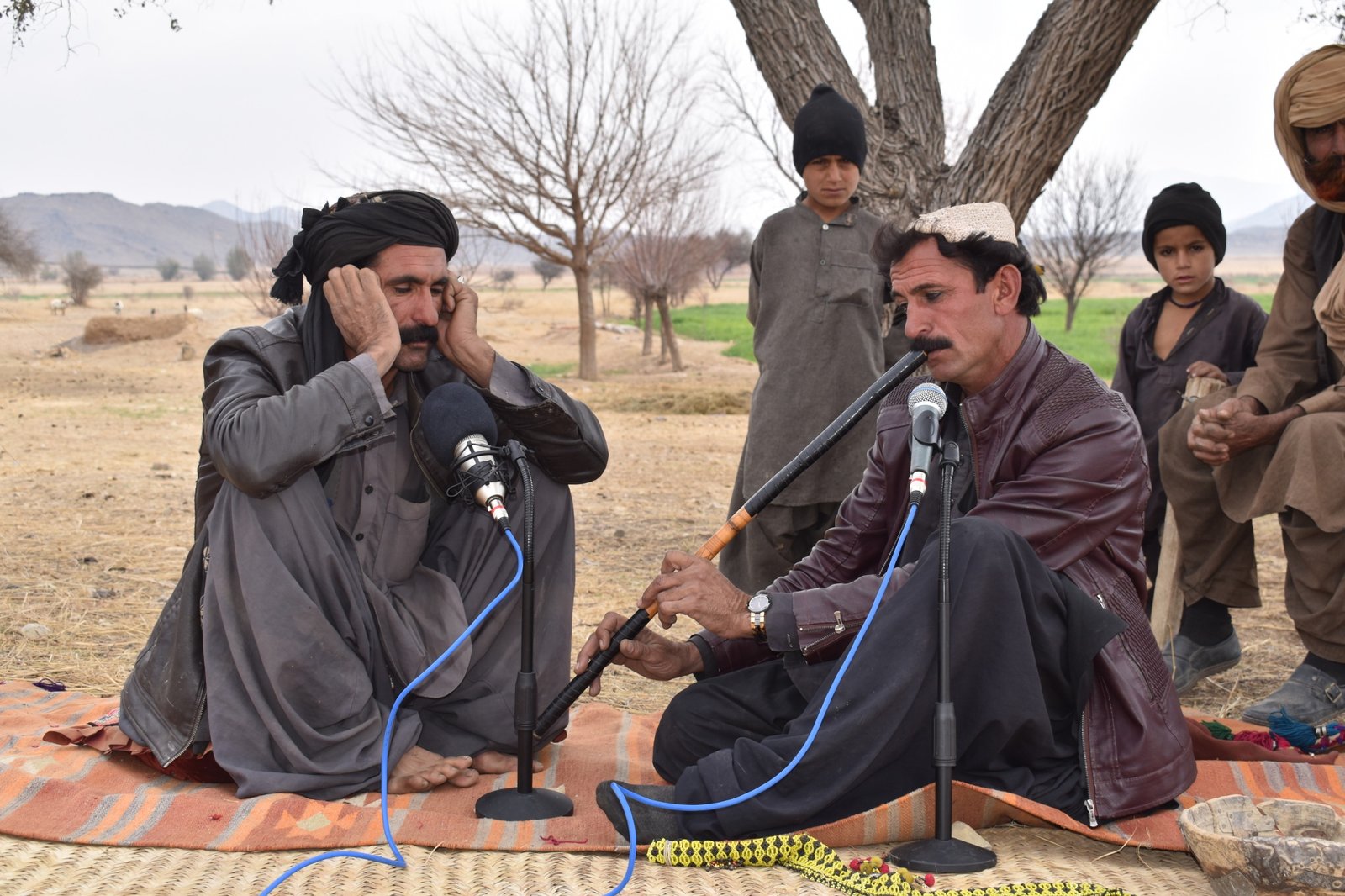
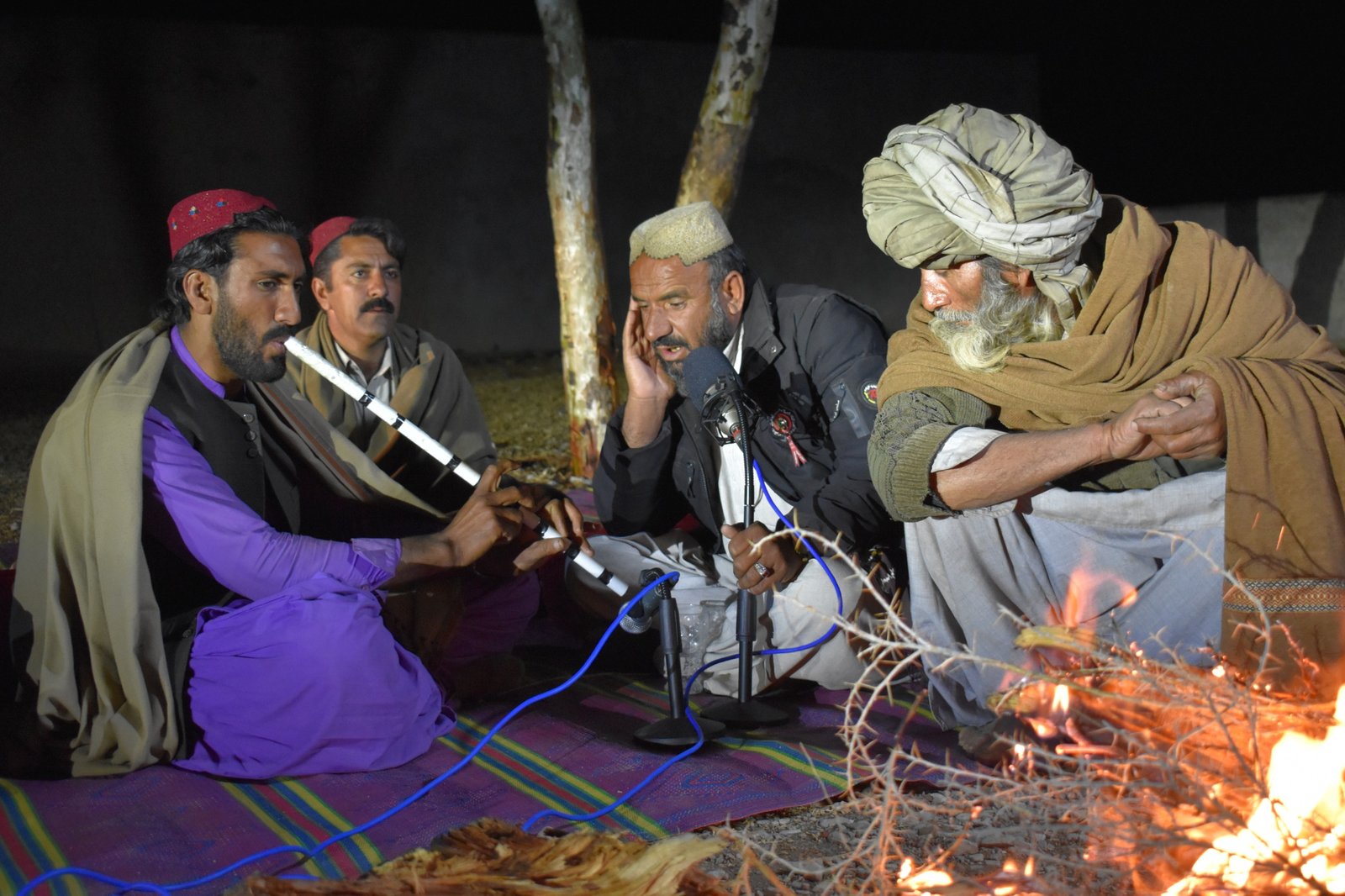
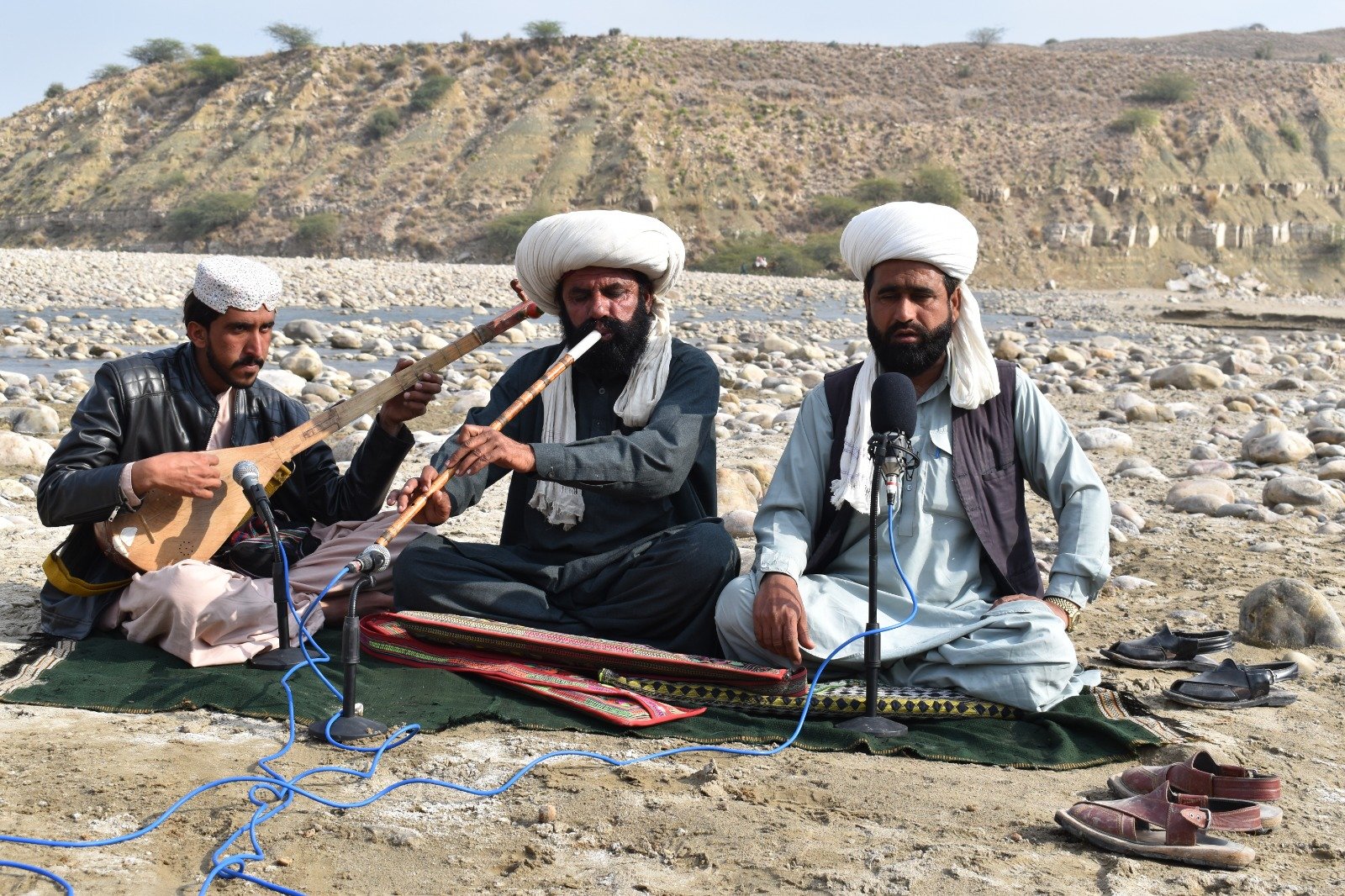
Naṛ Sūr, known as Naṛ Sūr in Balochi and Naṛ stúnai in Pashto (also spelled as Narh Sur), is a traditional musical form prevalent in parts of Pakistan, particularly in Eastern Balochistan. It combines two elements: Naṛ, a type of flute, and Sūr, a form of throat singing synchronized with the rhythm of the flute. This art form is celebrated for its unique blend of poetic lyrics, rhythmic beats, and instrumental accompaniment. In this cultural tradition, the flute (Naṛ) is played by a musician called a Naṛe in both Balochi and Pashto, while the throat singing (sūr) is performed by a throat singer known as sūri in Balochi or stúnchaé in Pashto.
The region of Koh-i-Sulaiman, also known as the Solomon Mountains, encompasses parts of Balochistan, Khyber Pakhtunkhwa, and Punjab. The inhabitants of this mountainous expanse—primarily Balochi- and Pashto-speaking tribes—traditionally lead semi-nomadic lives, relying largely on animal husbandry, particularly sheep and goats, for their subsistence economy. Naṛ Sūr performances are commonly found in districts of Eastern Balochistan such as Sibi, Quetta, Killa Saifullah, Zhob, Loralai, Musakhel, Barkhan, Kohlu, and Dera Bugti, as well as in tribal areas of Punjab such as Taunsa Sharif. Among the tribes inhabiting these regions, Naṛ Sūr is practiced by both Balochi- and Pashto-speaking communities, as well as smaller language groups including Khetrani, Jafferki, Waneci, and Brahui. These performances play a central role in social gatherings and wedding ceremonies, where Naṛ Sūr masters present Dastanghsin Balochi—short poetic compositions sung alongside the flute. The poetry of Naṛ Sūr often includes love ballads, historical narratives, and stories of brave heroes involved in tribal conflicts and later resistance against colonial and postcolonial states. Notably, the poetic traditions differ between Pashto and Balochi forms: Pashto Naṛ stúnai relies heavily on Kakaṛé Ghaṛy, while Balochi Naṛ Sūr draws upon epic narrative traditions.
The popularity of Naṛ Sūr and Naṛ stúnai among the people of Koh-e-Sulaiman can be attributed to both geographical and cultural factors. The vast, open landscapes of the region provide an ideal environment for the sounds of throat singing to travel over long distances. Moreover, the animistic worldview prevalent in this area emphasizes the spiritual significance of natural elements and their sounds. Consequently, the human imitation of nature’s sounds is regarded as the foundation of throat singing practices. As a distinct cultural zone, Koh-e-Sulaiman has historically been subject to incursions by external powers seeking to interfere in tribal affairs. At the same time, the region’s relative isolation has enabled its inhabitants to preserve and safeguard their intangible cultural heritage from the homogenizing pressures of colonial and modern influences.
Naṛ Sūr, primarily a pastoralist and nomadic tradition, continues to thrive in districts where animal husbandry and nomadic lifestyles remain prevalent. However, in areas undergoing a transition toward agriculture and market-based economic systems, folk music traditions—including Naṛ Sūr—have declined among certain tribes. This decline is largely attributed to changes in accessibility, shifting economic activities, and transformations in traditional livelihoods and cultural practices. The popularity of Naṛ Sūr and Naṛ stúnai experienced a significant boost during the cassette player era, when recording and duplication became accessible through local music shops in Loralai, Zhob, Kohlu, Taunsa Sharif, and surrounding areas. A second phase of resurgence has occurred in the digital age, driven largely by the spread of performances and recordings on social media platforms such as Facebook and YouTube.
Nar Sur is a traditional folk musical instrument of Sindh, Pakistan, made primarily from natural reed (nar). It is played by local musicians to accompany folk songs, spiritual poetry, and cultural gatherings. The practice reflects indigenous craftsmanship and oral musical traditions passed down through generations. Nar Sur holds cultural significance as an expression of regional identity and heritage.